Affiliate disclosure: We may earn a commission if you buy through retailer links on this page, at no extra cost to you. Rankings are based on published specifications and listed prices, rather than hands-on testing or commission rates.
Dive computer comparison
Choose by the dive. Not the spec sheet.
A clearer way to compare recreational dive computers by the decisions that matter underwater: legibility, algorithm, battery, navigation, and what kind of diving you actually do.
4Recreational computers compared
$225–$380Observed US price range
3User-changeable battery models
11 JULPrices and stock checked
The short list
Four good computers. Four different reasons.
Prices were observed at Scuba.com on July 11, 2026 and can change. These are researched comparisons rather than claims of hands-on testing.
Best value & simplicityCressi Leonardo 2.0
$224.95
Buy if: you want a big display, one-button setup, Air/Nitrox/Gauge modes and a user-changeable battery.
Skip if: built-in Bluetooth or freediving mode matters. Data transfer requires an optional interface.
Check price & stock →Best for broad basic modesSuunto Zoop Novo
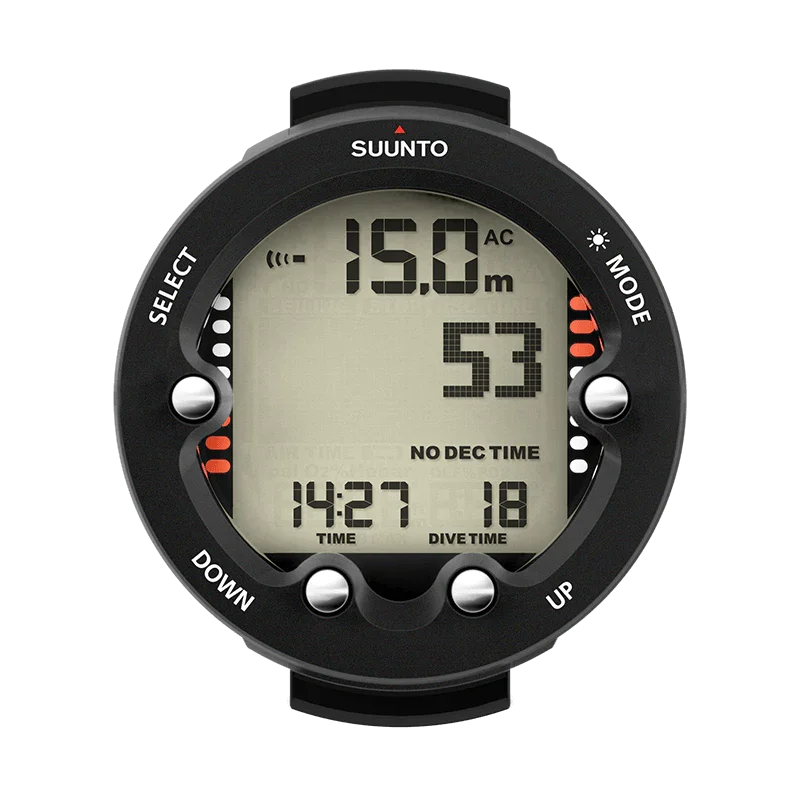
$279.00
Buy if: you want Air, Nitrox, Gauge and Free modes, a large backlit display and Suunto RGBM.
Skip if: you want phone syncing. At 120 g and 26.2 mm thick, it is also the bulkiest choice here.
Check price & stock →Best modern entry pickMares Puck 4
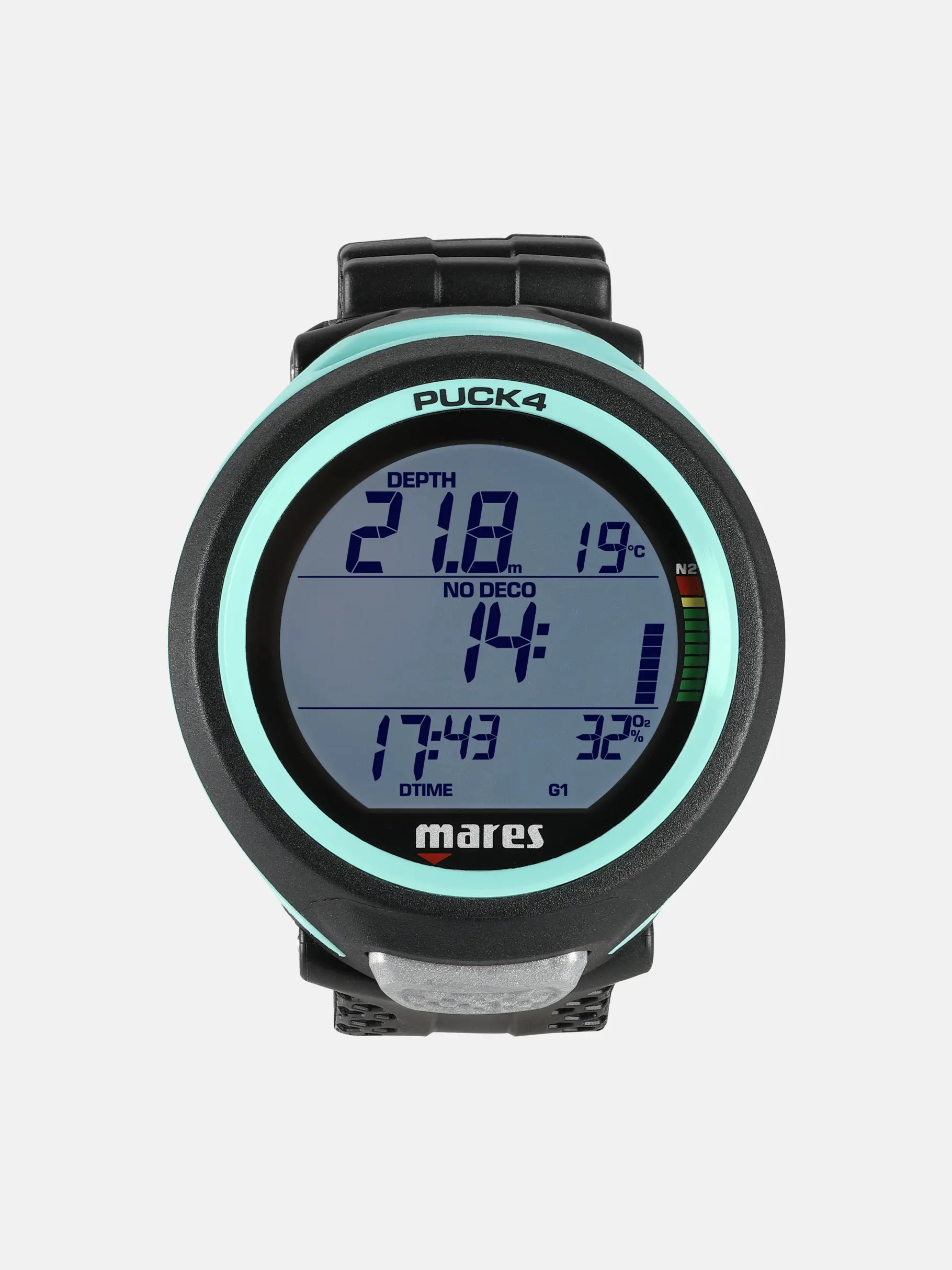
$319.00
Buy if: you want Bühlmann ZH-L16C, adjustable gradient factors, three-gas support, Bluetooth and a CR2450 battery.
Skip if: lowest price or a multi-button interface is your priority.
Check price & stock →Best algorithm choiceOceanic Veo 4.0
$379.95
Buy if: you want Oceanic's Dual Algorithm, two Nitrox mixes, two-button controls and DiverLog+ Bluetooth.
Skip if: price is decisive. It costs about $155 more than the Leonardo in this snapshot.
Check price & stock → Side-by-side
The complete comparison.
The Leonardo is the value choice. The Zoop Novo adds freediving. The Puck 4 has the strongest current entry-level feature mix. The Veo 4.0 costs more but uniquely offers selectable algorithms.
Our verdict
Buy the Puck 4 for features. Buy the Leonardo for value.
For a new recreational diver buying today, the Mares Puck 4 offers the best overall balance: a current Bühlmann algorithm, adjustable gradient factors, multi-gas support, built-in Bluetooth and a user-changeable battery. If you want to spend the least and keep operation simple, choose the Cressi Leonardo.
01Best overall: Mares Puck 4
The newest and deepest feature set here without jumping into color-screen or air-integrated pricing.
02Best value: Cressi Leonardo
About $95 less than the Puck 4 while still covering core recreational Air and Nitrox diving.
03Best freediving crossover: Zoop Novo
The dedicated Free mode and large display make it the better mixed scuba/freediving option.
04Best algorithm choice: Veo 4.0
Oceanic's Dual Algorithm is the differentiator, alongside Bluetooth and two Nitrox mixes.
Safety note: A dive computer cannot eliminate decompression-sickness risk. Read the complete manufacturer manual, receive appropriate training and stay within your certification limits. Prices and availability can change.
Methodology
How we scored the products.
Selection was limited to current entry-level wrist computers with manufacturer documentation and a US retail listing. Weighting: core recreational capability 30%, controls and readability 20%, battery and serviceability 15%, connectivity and logging 15%, progression features 10%, listed price 10%. We did not score underwater comfort or real-world display performance because we have not personally tested these units.
By: Best Dive Gear Research Desk · Reviewed July 11, 2026 · Prices checked at 15:10 BOT.
Product gallery
See the computers.
Manufacturer-hosted product images are shown for identification. Colors and included accessories can vary by retailer configuration.
Before you order
Seller, returns and warranty.
All displayed prices link to Scuba.com, the seller used for this same-store comparison. Scuba.com states that unused merchandise may be returned within 30 days for a refund and for another 60 days for exchange or store credit, subject to its conditions; original shipping charges are not refunded. Manufacturer warranty coverage varies, and warranty claims can require inspection or manufacturer service. Confirm stock, delivery date, authorized-dealer status and exact warranty terms before buying.
Read return policy Read warranty policy
Dive computer comparison questions
How were these dive computers compared?
The page uses published specifications and listed prices rather than hands-on testing or commission rates. Its stated weighting covers recreational capability, controls and readability, battery and serviceability, connectivity and logging, progression features, and listed price.
Which model is presented as the value choice?
The page presents the Cressi Leonardo 2.0 as the value and simplicity choice, while the Mares Puck 4 is its overall feature pick.
Does a dive computer remove decompression risk?
No. The existing safety note says a dive computer cannot eliminate decompression-sickness risk and tells readers to follow training, certification limits, and the manufacturer's complete manual.